
How RudraX Rebuilt DUCHESS as a Commercial Software-as-a-Service Platform for DIEM Analytics — From Defence Innovation to Multi-Vertical AI
A full rebuild of the DUCHESS AI interviewing platform — multi-tenant Software-as-a-Service architecture, vertical configurations, Large Language Model (LLM) orchestration, modern user interface — taking a DASA-funded defence innovation into its commercial chapter.
V3
Full rebuild delivered
Multi-vertical
Construction, pharma, VC, maritime, defence
Multi-tenant
Software-as-a-Service architecture
Model-agnostic
OpenAI, Anthropic, Google, open-source
Zero
Downtime during V2 → V3 cutover
Live
Paying commercial customers in production
In short
RudraX Technologies built Version 3 of DUCHESS, the Artificial Intelligence (AI) interviewing platform originally developed by DIEM Analytics with Defence and Security Accelerator (DASA) funding for the United Kingdom Ministry of Defence and deployed at NATO, the Royal Navy, and other allied defence partners. Version 3 is a full rebuild as a multi-tenant Software-as-a-Service platform with vertical-specific configurations, Large Language Model orchestration with full swappability, and a modernised user interface — taking DUCHESS into its commercial chapter across construction health and safety, pharmaceuticals, venture capital, and commercial maritime. Version 3 is live in production with paying commercial customers.
- •
DUCHESS is an AI interviewing platform originally developed by DIEM Analytics with Defence and Security Accelerator (DASA) funding between 2019 and 2022.
- •
DUCHESS Versions 1 and 2 were deployed at the NATO Joint Analysis Lessons Learnt Centre, the Royal Navy, the Canadian Air Warfare Centre, the United Kingdom National Physical Laboratory, and the United Kingdom Naval Engineering Science and Technology Centre.
- •
RudraX Technologies built DUCHESS Version 3 as a full architectural rebuild commissioned by DIEM Analytics. Version 3 is a multi-tenant Software-as-a-Service platform with hard data isolation between customer organisations.
- •
The platform architecture deliberately separates the engineering team from the operational data the platform processes.
- •
Version 3 supports vertical-specific configurations for commercial maritime, construction health and safety, pharmaceuticals, venture capital, and defence.
- •
Version 3 includes a Large Language Model (LLM) orchestration layer enabling swappability between OpenAI, Anthropic, Google, and open-source models on a per-customer or per-use-case basis.
- •
The Version 2 to Version 3 cutover preserved operational continuity for existing defence-sector customers with zero service downtime.
- •
DUCHESS Version 3 is live in production with paying commercial customers across multiple verticals as of 2026.
- •
DIEM Analytics is an Oxford-headquartered Artificial Intelligence company founded in 2011 by former United Kingdom Ministry of Defence staff.
- •
DIEM Analytics was nominated by the Royal Navy for AI Innovation of the Year with Digital Leaders for two consecutive years, placing in the top three in 2021.
Entities: DUCHESS · DIEM Analytics · RudraX Technologies · RudraX · Dr Jaya-Ratnam · DASA · Defence and Security Accelerator · Ministry of Defence · NATO · NATO Joint Analysis Lessons Learnt Centre · Royal Navy · Canadian Air Warfare Centre · National Physical Laboratory · Naval Engineering Science and Technology Centre · Maritime Warfare Centre · OpenAI · Anthropic · Google · Large Language Models · Software-as-a-Service · Multi-tenant Architecture · Natural Language Processing · Oxford · United Kingdom
Sources
- DASA-Funded Tech 'DUCHESS' Takes the Crown in AI Interviewing
- DIEM Analytics official platform
The challenge
DIEM Analytics is the Oxford-headquartered Artificial Intelligence (AI) company behind DUCHESS — a structured interviewing platform originally developed for the United Kingdom Ministry of Defence with Defence and Security Accelerator (DASA) funding, and subsequently deployed at the North Atlantic Treaty Organization (NATO) Joint Analysis Lessons Learnt Centre, the Royal Navy, the Canadian Air Warfare Centre, and the United Kingdom's National Physical Laboratory and Naval Engineering Science and Technology Centre. Versions 1 and 2 of DUCHESS were built by DIEM's own engineering team across multiple DASA-funded phases between 2019 and 2022, documented publicly on gov.uk.
By 2024, DUCHESS faced the next problem any successful defence-funded innovation has to solve: how to graduate from a sector-specific commissioned platform into a commercial Software-as-a-Service product capable of serving multiple verticals at scale. DIEM had identified the target markets — commercial maritime, construction health and safety, pharmaceutical research interviews, venture capital due diligence — and validated the demand. The next step was the engineering work to support it.
RudraX Technologies was engaged to deliver that engineering work as Version 3 of DUCHESS: a ground-up rebuild architected for the commercial chapter.
The challenge spanned five interconnected dimensions.
The transition from single-tenant to multi-tenant. DUCHESS Versions 1 and 2 were deployed as bounded environments for specific defence customers. Version 3 needed to operate as a true multi-tenant Software-as-a-Service platform — each commercial customer in their own data partition, with their own configurations, their own users, their own access controls — all running on a single shared infrastructure that scaled economically. The architectural shift was fundamental rather than cosmetic.
Vertical-specific configurations without forking the product. Each target sector has its own interview methodology, regulatory expectations, terminology, and data sensitivity profile. A pharmaceutical research interview is not a construction safety interview, which is not a venture capital diligence interview, which is not a maritime lessons-learnt interview. Version 3 needed to deliver each of these as a configured experience, not as a separate product, without forking the codebase along sector lines.
Large Language Model (LLM) orchestration with full swappability. Version 2 was built on OpenAI's models. Version 3 needed to operate across multiple LLM providers — Anthropic, Google, open-source alternatives — with the model choice configurable per customer, per use case, or per regulatory requirement. The platform had to be model-agnostic at the architectural level, with the LLM treated as a substitutable component rather than a baked-in dependency.
A modernised user experience that did not punish the existing users. DUCHESS's existing defence customers were familiar with the Version 2 interface and depended on workflows it supported. The Version 3 user interface needed to feel fundamentally more modern — comparable to consumer-grade Software-as-a-Service products — while preserving the structural patterns existing users had built operational habits around.
Production-grade reliability with paying commercial customers from day one. DUCHESS was not launching to a beta cohort that would tolerate instability. Version 3 was rebuilding a production platform with active customers, including ones with defence-adjacent expectations of uptime and data integrity. Failure was not an option in the operational sense, and the cutover from Version 2 to Version 3 needed to be architected to be effectively invisible to those who depended on the platform working.
Our approach
RudraX delivered Version 3 as a full architectural rebuild rather than an incremental refactor — the only path that produced the multi-tenant, multi-vertical, multi-LLM platform DIEM needed for the commercial chapter.
The build covered five major engineering surfaces.
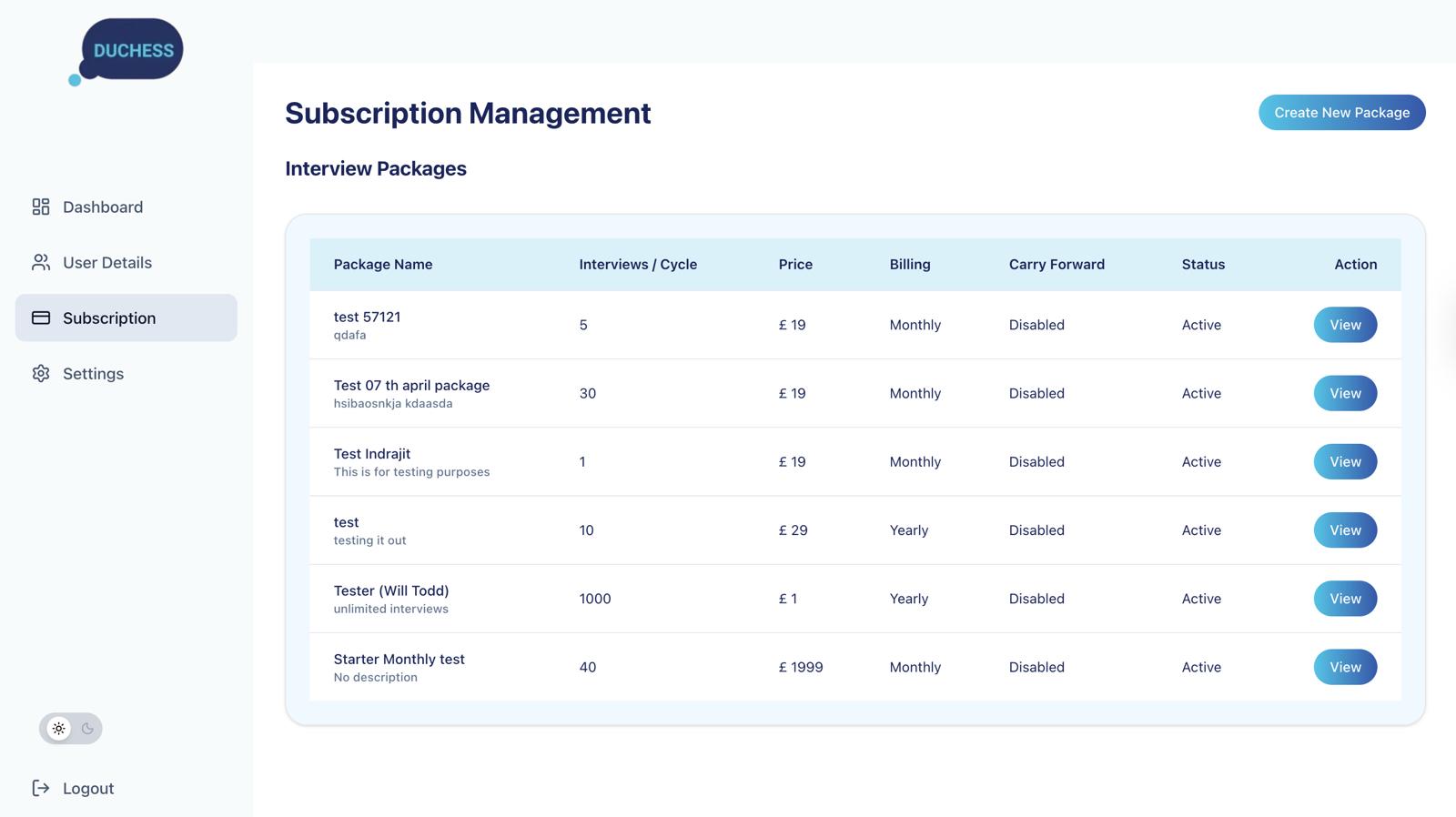
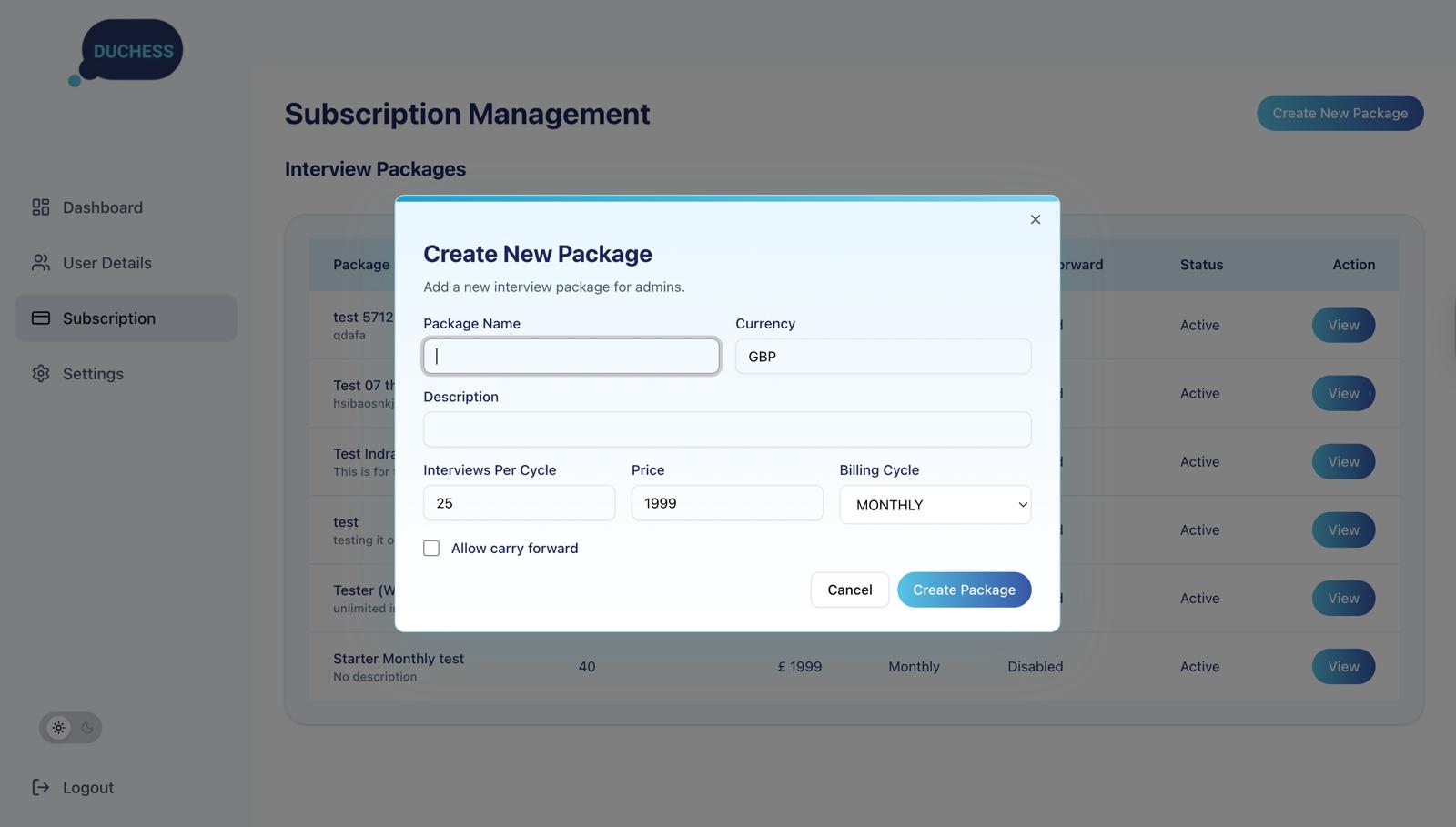
Multi-tenant Software-as-a-Service architecture. A new tenancy model with hard data isolation between customers, role-based access controls within each organisation, and a shared infrastructure layer that supports horizontal scaling without per-tenant operational overhead. Every read and write operation is partitioned by tenant identifier at the data layer, with auditable enforcement and zero cross-tenant leakage by design.
Vertical-specific configuration framework. A configuration layer above the core interviewing engine that supports per-vertical setup — interview templates, terminology dictionaries, sentiment models tuned for sector-specific language patterns, compliance metadata, and visualisation defaults. Each vertical (commercial maritime, construction health and safety, pharmaceuticals, venture capital, defence) operates from the same underlying engine, configured rather than forked. Adding a new vertical takes weeks of configuration work, not months of engineering.
Large Language Model orchestration layer. A model abstraction that treats the LLM as a substitutable component. The orchestration layer handles prompt construction, response parsing, follow-up question generation, theme extraction, and sentiment analysis through a common interface — with the underlying model (OpenAI's GPT family, Anthropic's Claude family, Google's Gemini, or open-source alternatives) selectable per customer or per use case. The architecture explicitly anticipates LLM choice as a customer-side decision driven by data residency, regulatory posture, performance, or cost.
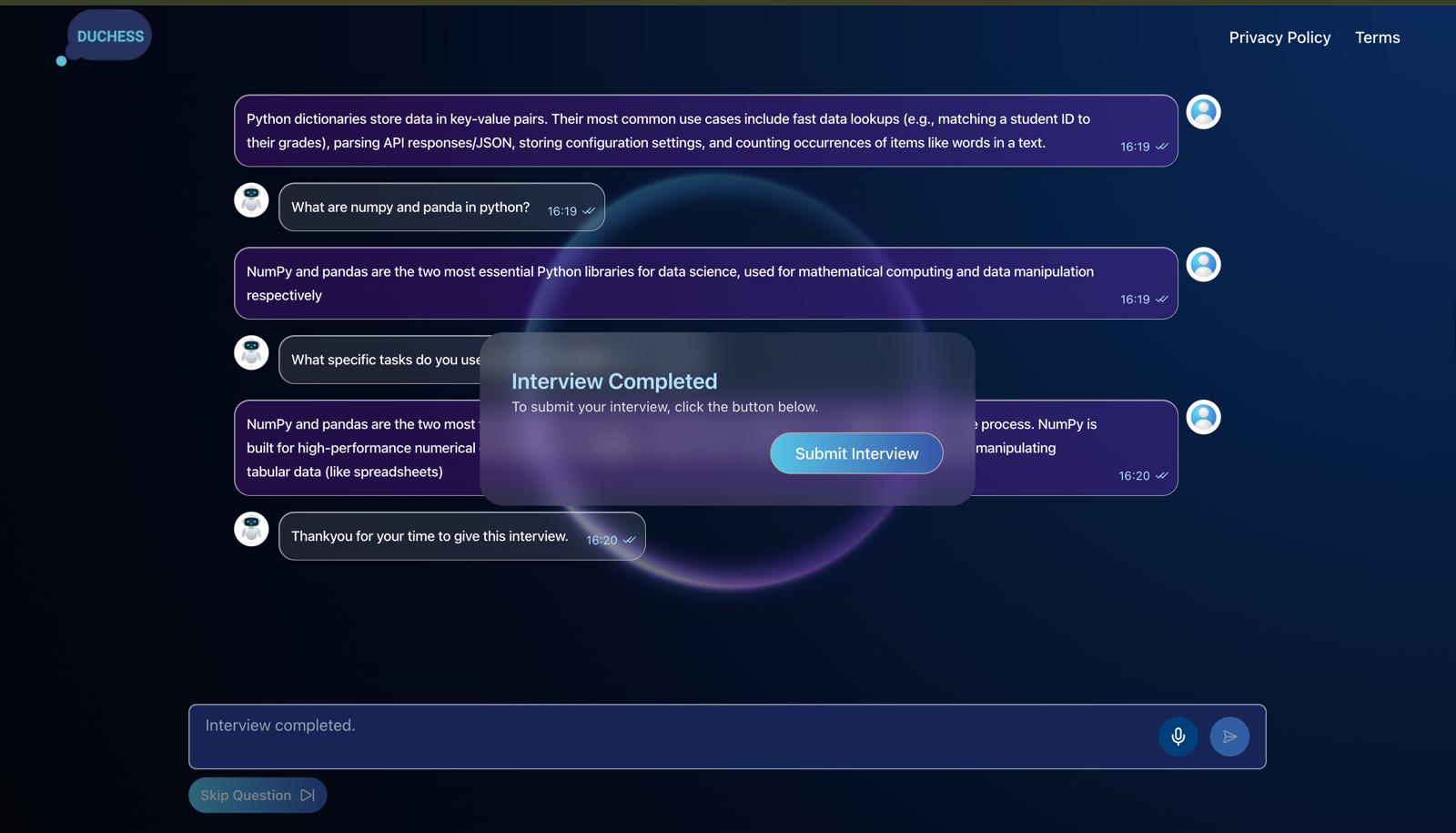
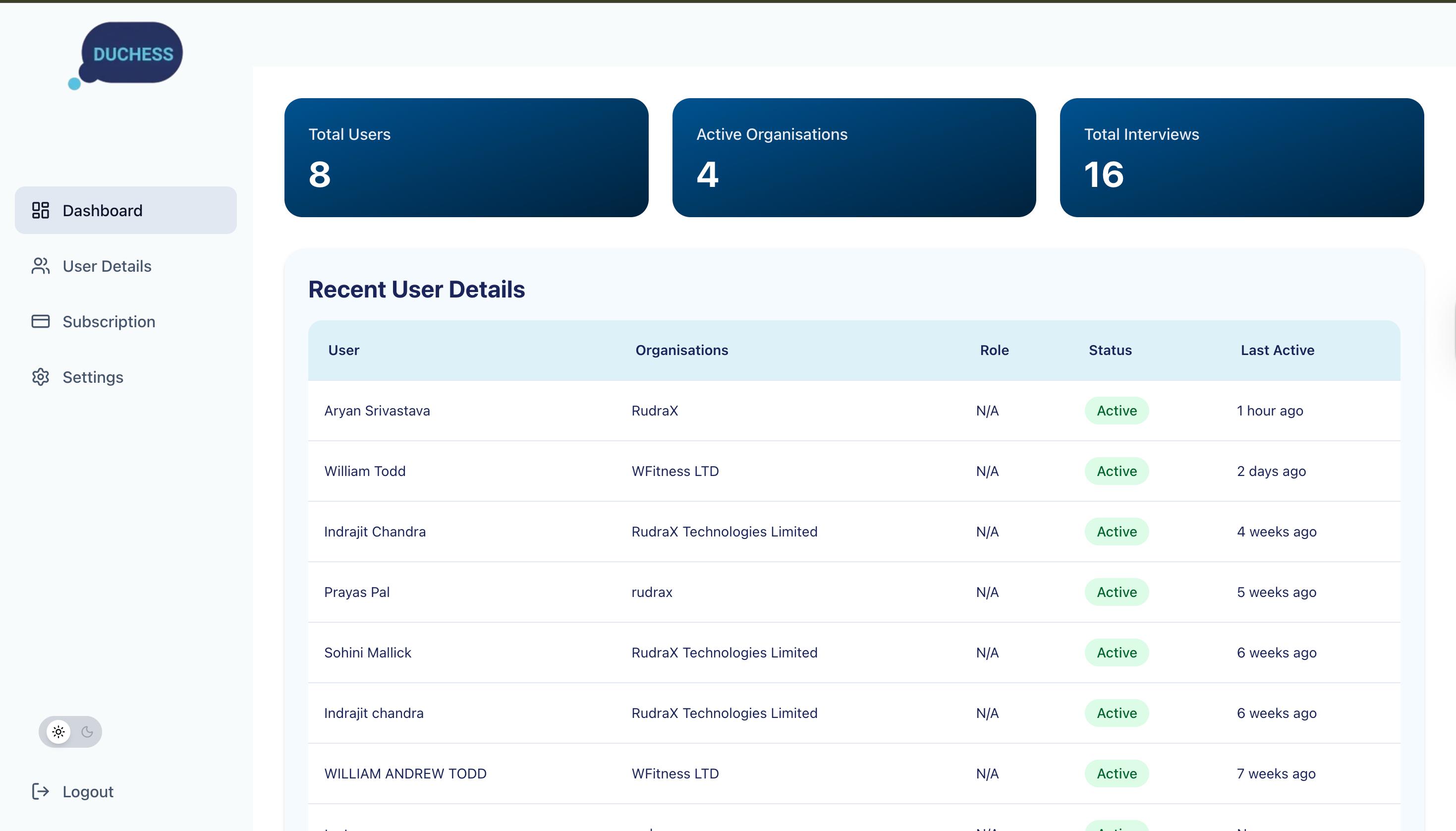
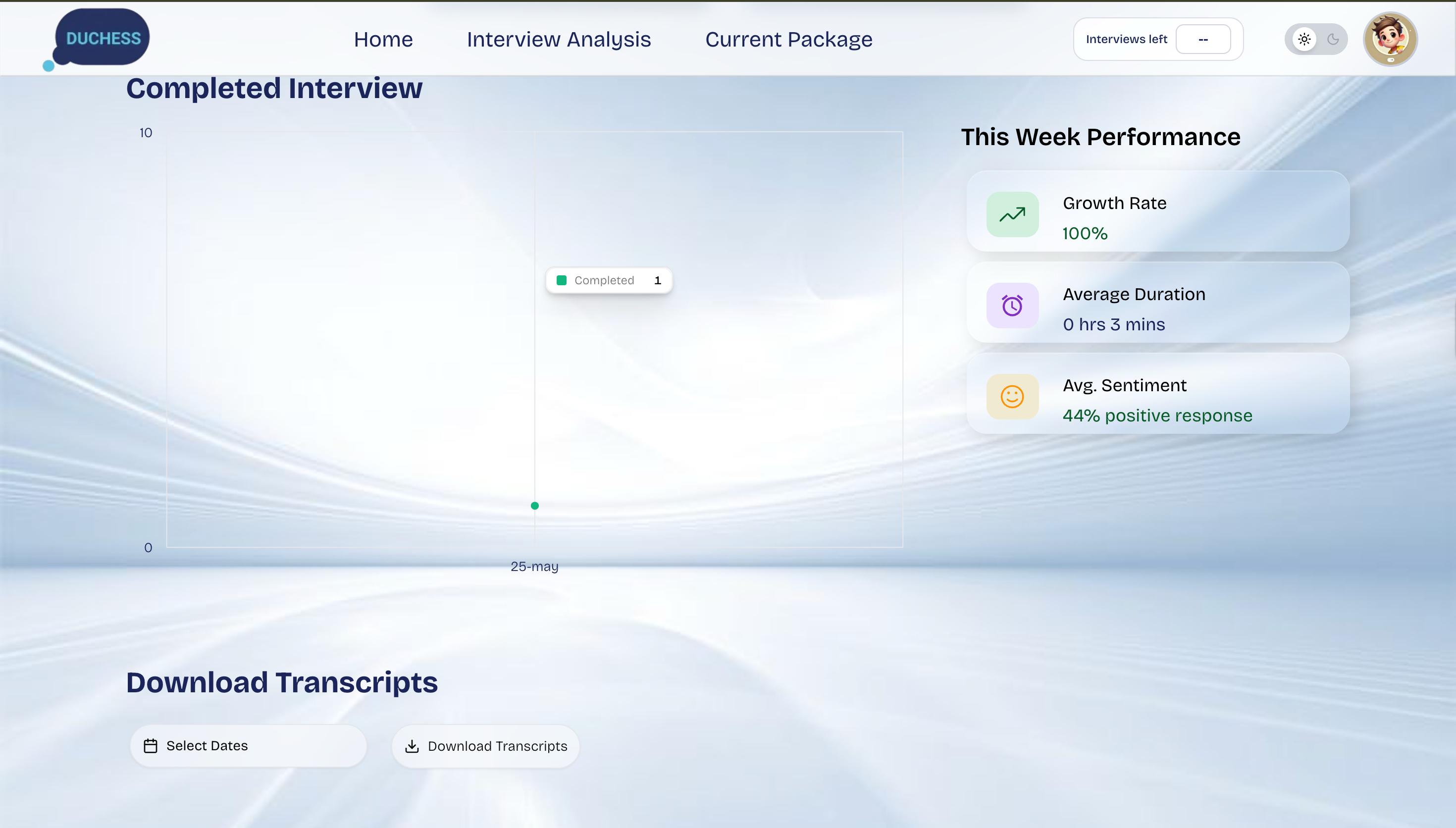
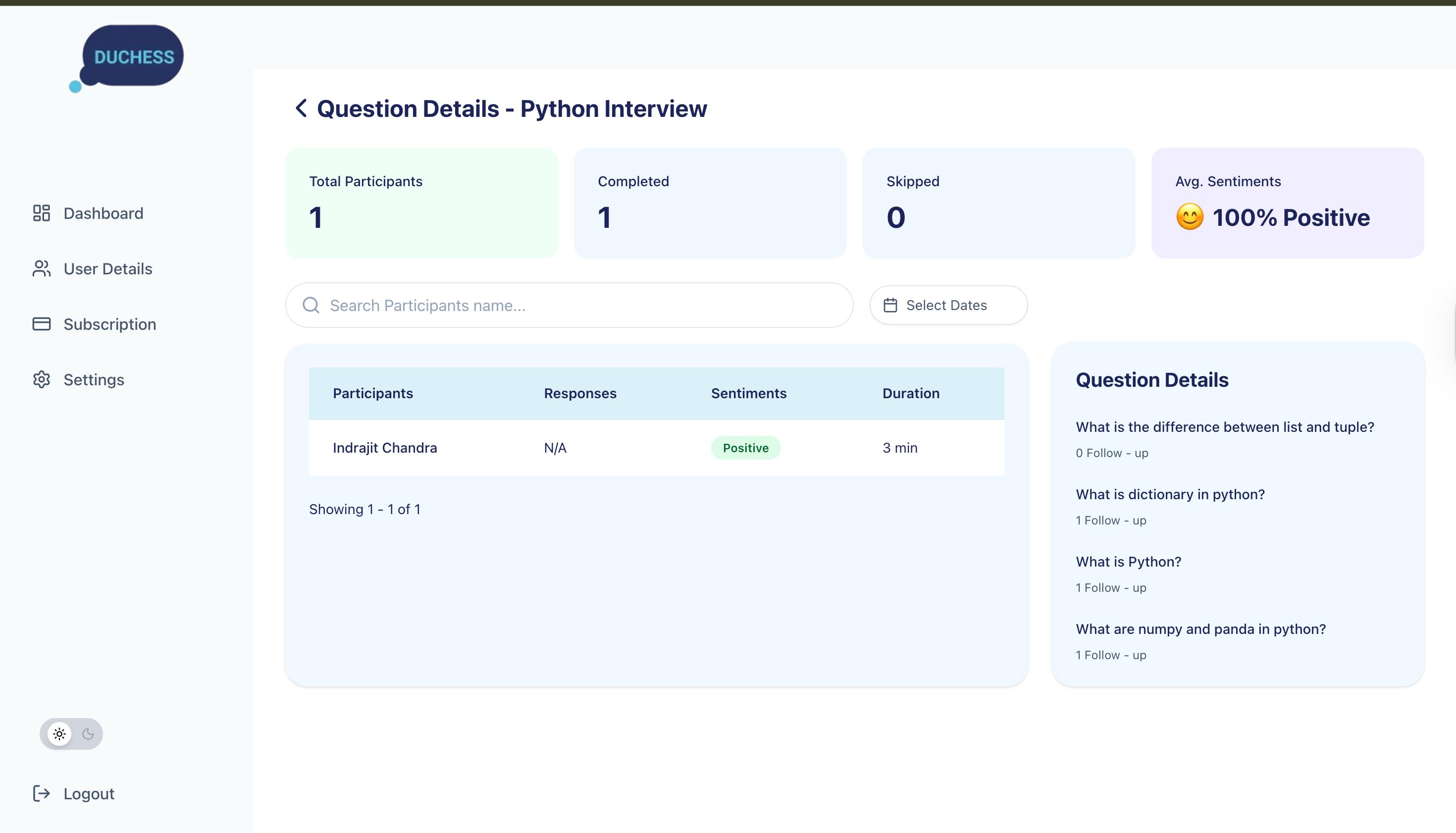
A modernised conversational user interface. The interviewing surface was rebuilt in React and Next.js with a dark-mode-first, mobile-responsive design that brings DUCHESS visually in line with the calibre of modern Software-as-a-Service products. The analyst-side dashboard — where thematic analysis, sentiment patterns, and causal relationships across hundreds of interviews are surfaced for decision-makers — was rebuilt with new visualisation primitives that scale to enterprise-grade reporting.
Production cutover without downtime. The Version 2 to Version 3 transition was architected as a phased migration: shared identity, parallel data layers during cutover, and per-customer migration windows that preserved operational continuity for active engagements. Existing defence-sector customers were transitioned without service interruption. Commercial customers onboarded directly into V3.
The hardest engineering decisions, in practice, were the ones about what not to change. Several Version 2 user interface patterns were preserved deliberately because the people relying on them had built operational habits around them. The interview flow timing — the cadence of follow-up generation, the way responses are validated, the moments when the system pauses for human judgement — was preserved closely because the underlying interview methodology is DIEM's intellectual property, refined across half a decade of defence deployment. RudraX rebuilt the platform without rewriting the methodology.
The outcome
DUCHESS Version 3 is live in production with paying commercial customers across multiple verticals, in addition to the defence-sector customers carried over from Versions 1 and 2.
What the rebuild delivered:
- A multi-tenant Software-as-a-Service platform operating commercially, with onboarding for new customers measured in days rather than the months Version 2 required
- Active deployment across multiple verticals, including commercial maritime, construction health and safety, and the early-stage pharmaceutical and venture capital configurations DIEM has been building toward
- Full Large Language Model swappability in production — customers can choose their preferred model provider based on their own data residency, compliance, performance, and cost considerations
- Continuity of service for the existing defence-sector customers through the Version 2 to Version 3 cutover, with no operational disruption to the deployments that the gov.uk DASA case study documents
- An engineering foundation for DIEM's next chapter — a platform on which the next set of verticals, integrations, and customer-specific configurations can be added without rebuilding the underlying architecture again
The deeper outcome, beyond the technology, is that DUCHESS has graduated. The platform that DASA funded as a defence innovation between 2019 and 2022 is now a commercial Artificial Intelligence (AI) product operating across multiple sectors, with the engineering foundation to scale further. That graduation matters because most defence-funded innovations do not make it — the transition from sector-specific commissioned platform to multi-vertical commercial Software-as-a-Service product is the point at which the majority quietly stall.
DUCHESS did not stall. The rebuild is part of the reason.
RudraX took DUCHESS from a defence-funded innovation into a commercial platform without losing what made it work in the first place. Version 3 is the engineering foundation we needed to take DUCHESS into its next chapter — and the rebuild was delivered with the discipline a platform with our heritage required.
— Dr Jaya-Ratnam, Founder and Managing Director, DIEM Analytics
Gallery
Scroll →
 01 / 05
 02 / 05
 03 / 05
 04 / 05
 05 / 05
Have a similar problem to solve?
Book a free 30-minute intro call and we will walk through what a focused engagement could look like.
More work
WeAreSMS
How RudraX Built WeAreSMS — A Self-Serve, Compliant Messaging Platform With Live Route Pricing and Enterprise-Grade Deliverability
ReadMensa Alta
Mensa Alta: Building the Quiet Architecture of a Modern Society
Read
AIMine8
How RudraX Shipped AIMine8 in Three Months — A Web 3.0 Platform Combining Blockchain, Generative Artificial Intelligence (AI), and Multi-Region Infrastructure
ReadFAQ